


Finding a Trustworthy Spiritual Teacher: Essential Tips for Your Journey

Finding a spiritual teacher you can trust is one of the most important steps on your path to personal growth and deeper understanding. A genuine mentor can illuminate your journey, help you navigate challenges, and support meaningful transformation.
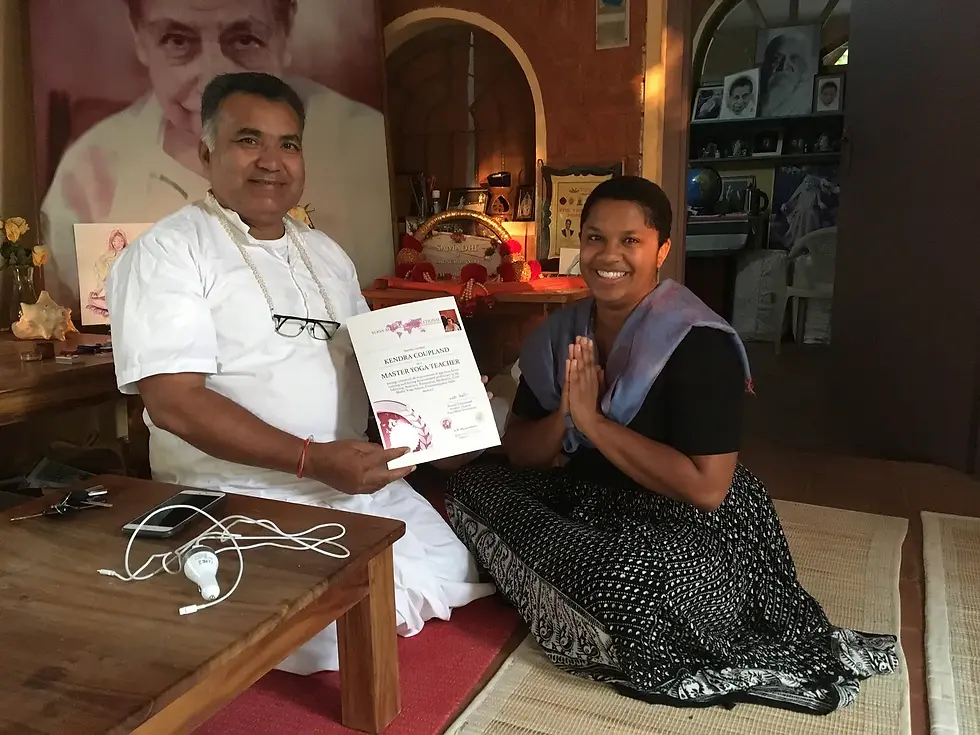
As a yoga teacher now based out of Metro Vancouver, I went through the journey of finding a spiritual teacher myself - twice. In fact, I travelled all the way to India to study decolonized yoga under Swami Vidyanand after first studying under the late Sally Kempton. Now I regularly meet students at my studio in Port Coquitlam, many of whom feel overwhelmed by the sheer number of teachers, TikTok spiritual coaches, yoga styles, and spiritual spaces available today.
This guide offers practical tips I’ve learned over the years for identifying predatory behaviour and recognizing a trustworthy spiritual teacher, so you can move forward with clarity and confidence.
Understand What You Need from a Spiritual Teacher
Before beginning your search, get specific about what you're actually looking for. Not all spiritual teachers offer the same approach.
Ask yourself:
Are you seeking yoga classes, meditation, mindfulness, or a specific spiritual tradition?
Do you want practical tools for daily life or deeper philosophical understanding?
How much of a time commitment do you want to make? Are you looking for casual classes or workshops or ongoing guidance and mentorship?
Clarity here prevents you from wasting time on teachers who aren’t aligned with your goals. When I first tried practicing yoga, I went to the closest studio to my home. There I met a teacher who pushed me to overextend myself in my first class without knowing anything about me or my history. I knew immediately that bodily autonomy was going to be important to my future spiritual teacher - whoever they were. So that became something really important to me on my search for a yoga teacher.
Look for Authenticity and Integrity
A trustworthy teacher demonstrates consistency between what they say and how they live.
Key signs include:
Humility and openness to being questioned
Willingness to admit limitations
Understands that trust is built slowly, over time, through consistency.
Respect for your autonomy and personal path
No pressure to commit financially or emotionally
Be cautious of exaggerated claims, “quick enlightenment,” or promises like "change your life today". Anyone positioning themselves as uniquely superior, or demanding unquestioning loyalty and trust from you, should also be approached with caution.
Enlightenment is not something you can buy; it emerges out of awareness, which expands over time.
Check Their Background and Experience
Experience matters, but it shouldn't be performative.
Look into:
Training, lineage, or long-term study
Alliances** or Memberships that hold them to a standard of ethics
Teaching experience and student relationships
Consistency in their message over time
If you’re exploring yoga teachers in Vancouver specifically, you’ll notice a wide range, from highly trained instructors to self-appointed gurus. Neither is automatically good or bad, but transparency is non-negotiable.
The benefit of finding a teacher within a lineage is that the history, texts, and teachings already exist for you to study, with or without the guidance of a teacher. If you like the teachings but something about a teacher rubs you the wrong way, you can always find another teacher within that lineage.
It's also important to know that alliances (especially in the West) are also not the be-all-end-all. My teacher, who has been teaching yoga for more than 40 years in India, still can't technically get certified by the USA Yoga Alliance. Why? Because he didn't study at an "affiliated school" in North America. While some alliances have worked to amend this, the process of getting alliance memberships is still often racist and excludes highly experienced South Asian teachers, despite South Asia being the motherland of yoga. It's part of why my teacher founded the Yoga Alliance of India and the World Yoga Federation. I was also initially rejected by the USA Yoga Alliance because I studied in India and not in North America despite the fact I did twice as much training than yoga schools in Canada even offer. So do take alliances with a grain of salt.
Observe How They Treat Their Students
This is one of the most reliable indicators.
Pay attention to whether the teacher:
Listens carefully and responds thoughtfully
Shows patience and emotional steadiness
Encourages independence rather than dependence
A healthy teacher-student dynamic should feel respectful and mutual, not hierarchical or controlling. As a yoga teacher, I learn so much from my students. My students' critical thinking and questions help me to clarify practices, and even discover modifications I wouldn't have thought of on my own. As someone who has studied yoga extensively, I sometimes forget people are not familiar with the philosophy side of yoga, so when students ask me questions, it gives me an opportunity to simplify practices to make them more attainable.
Seek Recommendations and Testimonials
In a yoga-centric city like Vancouver, word travels quickly within yoga and wellness communities.
Look for:
Honest, nuanced testimonials
Consistent feedback across different students
A reputation that extends beyond social media
If you're looking for Vancouver yoga classes, community reputation often tells you more than anyone's marketing ever will. Another great tip? Show up for a handful of classes consistently. Are the same students returning, or is it a new crowd every time? Students tend to return when they experience progress.
Attend Workshops or Drop-In Classes Before Committing
You do not have to commit based on online presence alone.
Instead, try:
Drop-in yoga classes
Workshops or meditation sessions
Community events
This gives you direct experience of their teaching style and presence. Trust what you observe, not just what is said on their website.
Notice How They Handle Criticism and Feedback
A mature and tenured teacher does not collapse under criticism or deflect accountability. Rather, they:
Stay open and composed
Reflect rather than react
Adjust when appropriate
Defensiveness, dismissal, or authority-based responses are all warning signs
The reality is that there is a power dynamic between all teachers and students. How teachers acknowledge and navigate that dynamic is essential. Teachers who cannot identify or name power dynamics are more likely to overstep boundaries and harm, even if unintentionally.
A Good Teacher Supports Your Independence
A trustworthy teacher does not position themselves as the answer. Instead, they should support you in deepening your own understanding, strengthening your discernment and critical thinking, and developing inner stability.
The trunk of a tree is the sturdy part of the tree that allows branches to extend upward towards the sun to receive life. I feel a good teacher is like the trunk of a tree. Sturdy and supportive. I always tell my students, I hope that they outgrow me! I want to be here to support them, but ultimately, they should be the ones to extend the wisdom. Your growth should make you less dependent, over time, not more. (Admittedly, it's a terrible long-term business model if you intend to be a teacher with integrity lol)
Be Aware of Red Flags
Some behaviours should immediately give you pause:
Pressure to spend large amounts of money
Encouraging isolation from friends or family
Creating dependency or emotional control
Claiming exclusive access to truth or enlightenment
Treating you like you are a 'special' or 'chosen' one
Blurring ethical or personal boundaries / stepping outside of their scope
Having romantic or sexual relationships with students
Spiritual language can sometimes be used to mask manipulation. Stay alert.
A trustworthy teacher can tolerate being questioned. When challenged, they don’t punish, withdraw approval, or reframe your question as a lack of readiness.
If you raise a concern, it should never be reframed as your trauma, your conditioning, or your lack of surrender.
Trust Your Own Experience
You don’t need to override your instincts to be “spiritual.”
After interacting with a teacher, ask:
Do I feel clearer or more confused?
Do I feel supported or subtly pressured?
Do I feel more like myself or less?
Your internal response is trustworthy data. Use it.
Finding the Right Yoga Teacher in Vancouver
If you're exploring yoga in Vancouver or looking for a spiritual teacher, take your time. There are genuinely skilled, ethical teachers here in the city —but in the era of late-stage capitalism, discernment matters. Remember, you are not just choosing a class. You are choosing who influences your life, and that is worth taking time to be mindful about.

Hello, I'm Kendra Coupland, and I'm a grandmaster yoga teacher based out of Metro Vancouver.
I work with activists, organizers, and caregivers who are burnt out, overwhelmed, or disconnected from their bodies, and support them in building sustainable, grounded practices so they can continue their work without losing themselves. I train yoga teachers to decolonize their practices, and I support individuals navigating trauma, identity, and systemic pressure who are interested in self-reclamation and self-liberation work.
I offer classes online, and I share my gifts in-person at my studio, which is situated on unceded kʷikʷəƛ̓əm territory, colloquially known as Port Coquitlam.


Comments